Ecommerce has evolved rapidly over the past decade, but one challenge has remained constant: delivering personalized experiences at scale. Today’s customers expect brands to understand their preferences, anticipate their needs, and provide relevant recommendations instantly.
This is where AI personalization ecommerce is transforming the landscape. By leveraging artificial intelligence, businesses can analyze user behavior, predict intent, and deliver highly tailored shopping experiences that drive engagement and increase sales.
What Is AI Personalization in Ecommerce?
AI personalization in ecommerce refers to the use of artificial intelligence to customize the shopping experience for each individual user. Instead of showing the same products and content to every visitor, AI systems dynamically adjust what users see based on their behavior, preferences, and interactions.
This includes everything from personalized product recommendations to dynamic pricing, targeted offers, and customized email campaigns. The goal is to create a more relevant and engaging experience that encourages users to take action.
As online shopping continues to grow globally, data-driven personalization is becoming a key differentiator for successful ecommerce businesses.
Why Personalization Matters More Than Ever
Modern consumers are overwhelmed with choices. Without personalization, it becomes difficult for users to find what they are looking for, leading to frustration and abandoned sessions.
AI-driven personalization addresses this challenge by simplifying the decision-making process. It helps users discover relevant products faster, which improves both user experience and conversion rates.
Businesses that invest in personalization often see:
- Higher engagement and longer session durations
- Increased conversion rates and average order value
- Improved customer loyalty and retention
This is why personalization is no longer optional. It is a critical component of ecommerce success.
How AI Powers Ecommerce Personalization
AI personalization relies on advanced algorithms that analyze large amounts of data in real time. These systems track user behavior across multiple touchpoints, including browsing history, purchase patterns, and interactions with content.
Using this data, AI models can identify patterns and predict what a user is most likely to do next. This allows businesses to deliver highly relevant experiences without manual intervention.
Key technologies behind AI-driven personalization include:
- Machine learning for pattern recognition and prediction
- Natural language processing for understanding user intent
- Data analytics for real-time insights
Together, these technologies create a powerful system that continuously learns and improves over time.
The Role of Product Recommendation Engines
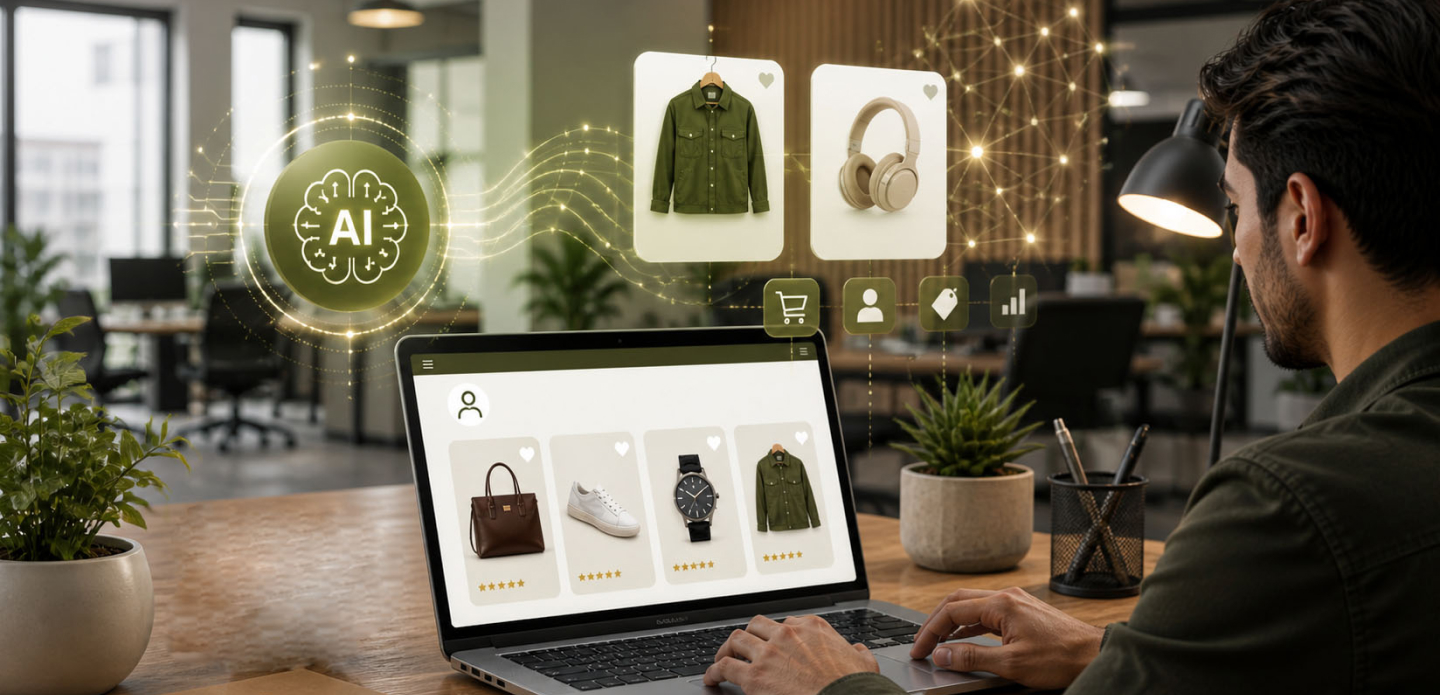
One of the most impactful applications of AI in ecommerce is the product recommendation engine ecommerce. These engines analyze user data to suggest products that are most relevant to each individual shopper.
A well-optimized recommendation engine can significantly increase sales by guiding users toward products they are more likely to purchase.
There are several types of recommendation strategies commonly used:
- Collaborative filtering, which suggests products based on similar user behavior
- Content-based filtering, which recommends items based on product attributes
- Hybrid models, which combine multiple approaches for better accuracy
These systems are the backbone of AI-driven product recommendations, helping businesses deliver personalized shopping experiences at scale.
Real-World Impact of AI-Driven Personalization
The impact of AI personalization on ecommerce performance is substantial. Businesses that implement advanced personalization strategies often experience measurable improvements in key metrics.
According to industry insights, AI-driven personalization is making online stores smarter by enhancing user experience and optimizing decision-making.
This transformation is not limited to large enterprises. Even small and mid-sized businesses can leverage AI tools to improve personalization and compete effectively in the market.
Key Use Cases of AI Personalization Ecommerce
AI personalization can be applied across multiple areas of an ecommerce store, creating a seamless and engaging user experience.
Some of the most effective use cases include:
- Personalized product recommendations on homepages and product pages
- Dynamic pricing and targeted discounts based on user behavior
- Customized email campaigns with relevant product suggestions
- Smart search results that adapt to user preferences
These use cases demonstrate how AI-driven personalization can influence every stage of the customer journey, from discovery to purchase.
Enhancing Customer Experience Through AI
Customer experience is at the heart of ecommerce success. AI personalization enhances this experience by making interactions more relevant and intuitive.
Instead of browsing through hundreds of products, users are presented with curated selections that match their interests. This reduces friction and makes the shopping process more enjoyable.
Personalization also creates a sense of connection between the brand and the customer. When users feel understood, they are more likely to engage, trust the brand, and make repeat purchases.
Additionally, aligning personalization with broader marketing efforts through digital marketing helps create a consistent and effective customer experience across all channels.
Integrating AI Personalization Into Your Ecommerce Strategy
Implementing AI personalization requires a strategic approach. Businesses need to identify the areas where personalization can deliver the most value and integrate the right tools accordingly.
For example, combining AI personalization with robust development solutions such as e-commerce development ensures that your store is built to support advanced features and scalability.
This integration ensures that personalization is not isolated but becomes a core part of your overall business strategy.
Measuring the Success of AI Personalization
To maximize the benefits of AI personalization, businesses must track and measure performance continuously. Data-driven insights help identify what is working and where improvements are needed.
Key metrics to monitor include:
- Conversion rates and revenue per visitor
- Average order value
- Customer retention and lifetime value
For a deeper understanding of how to scale ecommerce growth, this guide is highly relevant:
How to Grow an E-Commerce Business.
By analyzing these metrics, businesses can refine their strategies and achieve better results over time.
Challenges and Considerations
While AI personalization offers significant advantages, it also comes with challenges. Data privacy and security are critical considerations, as businesses must ensure that customer data is handled responsibly.
Another challenge is implementation complexity. Integrating AI systems requires technical expertise and ongoing optimization. However, with the right approach and tools, these challenges can be effectively managed.
It is important for businesses to start with clear goals and gradually scale their personalization efforts as they gain insights and experience.
The Future of AI Personalization in Ecommerce
The future of ecommerce is deeply connected to AI-driven personalization. As technology continues to evolve, personalization will become even more sophisticated and intuitive.
We can expect advancements such as real-time personalization across multiple devices, deeper behavioral insights, and more accurate product recommendations. These developments will further enhance the shopping experience and drive higher conversions.
Businesses that invest in AI personalization today will be better positioned to take advantage of these future opportunities.
Conclusion
AI personalization ecommerce is transforming how businesses interact with customers and drive sales. By leveraging AI-driven insights and recommendation systems, ecommerce stores can deliver highly relevant experiences that increase engagement and conversions.
From product recommendations to dynamic content and targeted campaigns, personalization is becoming a key driver of success in the digital marketplace. Businesses that adopt these strategies will not only improve their performance but also build stronger relationships with their customers.