
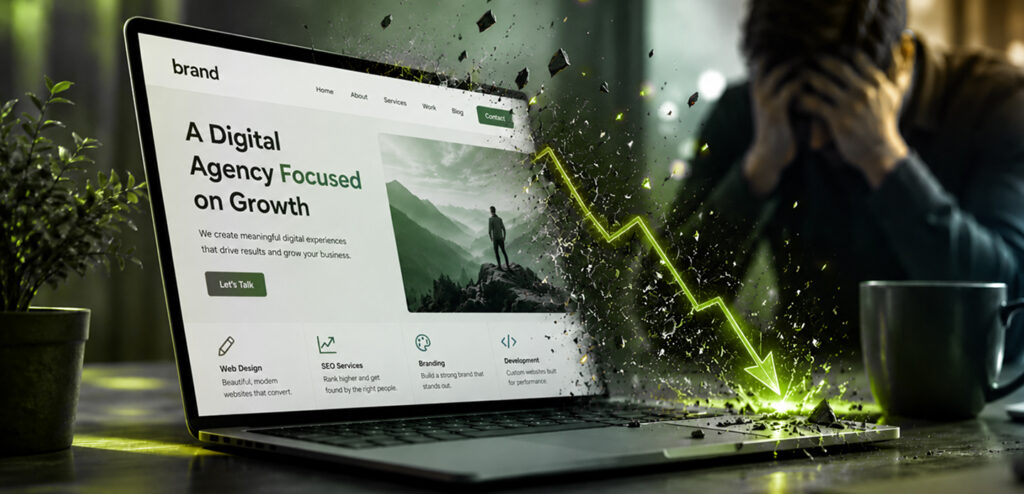
Your website should be one of your most valuable business assets. It should attract visitors, build trust, generate leads, and support your overall business growth strategy. Unfortunately, many companies unknowingly operate websites that do the exact opposite.
A poorly performing website can drive potential customers away, reduce visibility in search engines, and create friction throughout the customer journey. While business owners often focus on marketing campaigns, advertising budgets, and sales initiatives, they sometimes overlook the fact that their website may be limiting results before prospects ever reach the conversion stage.
If your website is struggling to generate meaningful results, it may be time to identify the underlying issues. Understanding these warning signs can help you make informed improvements that support sustainable growth.
Common Signs Your Website Is Costing You Customers
Several indicators suggest your website may be actively preventing growth rather than supporting it.
- High bounce rates and short session durations
- Poor mobile usability and navigation
- Slow loading pages
- Outdated visual design
- Declining organic search visibility
- Low lead generation or conversion performance
These issues often appear gradually, making them easy to overlook. However, their cumulative impact can significantly affect revenue, customer acquisition, and long-term growth.
According to insights from Wikipedia, bounce rate measures the percentage of visitors who leave a website after viewing only one page. While bounce rate alone does not tell the full story, consistently high bounce rates often indicate user experience or content relevance issues.
When visitors leave without exploring your site further, valuable opportunities are lost.
Poor User Experience Is Driving Visitors Away
One of the most common obstacles to growth is bad UX.
User experience influences how easily visitors can navigate your website, find information, and complete desired actions. When users encounter confusing layouts, inconsistent navigation, or unnecessary friction, they are far more likely to leave.
Research from Nielsen Norman Group emphasizes that usability plays a central role in determining whether users can effectively accomplish their goals. Websites that prioritize usability generally create stronger engagement and customer satisfaction.
Even small usability issues can impact conversions. For example, difficult navigation menus, cluttered interfaces, and unclear calls to action often create frustration that discourages visitors from taking the next step.
Businesses investing in professional Digital & Web Design services often improve both user satisfaction and overall website performance by creating more intuitive experiences.
Slow Website Performance Is Damaging Results
Website speed has become increasingly important for both users and search engines.
Modern consumers expect websites to load quickly regardless of device or location. Delays of only a few seconds can negatively affect engagement and conversion rates.
According to guidance from MDN Web Docs, web performance directly impacts user experience and accessibility. Faster websites typically deliver better engagement and stronger business outcomes.
Slow websites often suffer from:
- Unoptimized images
- Excessive scripts and plugins
- Poor hosting infrastructure
- Large page sizes
- Inefficient code
These issues not only frustrate users but also contribute to lower search visibility and reduced conversion performance.
If website speed remains a persistent challenge, addressing technical performance should become a priority within your broader business growth strategy.
Bad Website Design Can Undermine Trust
Your website creates a first impression long before a potential customer contacts your business.
A bad website design can make even a highly reputable company appear outdated or unprofessional. Visitors often form opinions within seconds, and visual credibility plays a major role in that process.
Outdated layouts, inconsistent branding, poor typography, and low-quality imagery can reduce trust and increase abandonment rates.
Design is not simply about aesthetics. Effective design helps guide users through the customer journey while supporting clarity, confidence, and conversion.
Businesses considering a website redesign often discover that improving design consistency and usability has a measurable impact on engagement and lead generation.
SEO Issues Are Limiting Your Visibility
Many websites fail to generate traffic because they are difficult for search engines to understand and index.
Common SEO issues include missing metadata, poor site structure, weak internal linking, duplicate content, and technical errors that affect crawling.
Even excellent products and services cannot generate leads if potential customers never discover them.
Strong search visibility remains a foundational component of any effective business growth strategy because it enables businesses to attract qualified traffic consistently over time.
Organizations seeking to improve online visibility frequently leverage professional Search Engine Optimization services to address technical challenges, improve rankings, and strengthen long-term organic performance.
Without proper SEO foundations, growth opportunities may remain hidden behind competitors who have invested more effectively in search optimization.
Your Conversion Rate Is Lower Than It Should Be
Traffic alone does not guarantee success.
Many businesses attract visitors but struggle with a low conversion rate because their websites fail to guide users toward meaningful actions.
Conversion obstacles often include unclear messaging, weak calls to action, complicated forms, and a lack of trust-building elements.
When visitors arrive on a website, they should immediately understand:
- What the business offers
- Why it is valuable
- What action they should take next
- How to proceed without confusion
When these elements are missing, even high levels of traffic can produce disappointing results.
Improving conversion pathways is often one of the fastest ways to increase business performance without increasing marketing spend.
Mobile Users Are Having a Poor Experience
Mobile traffic now represents a significant portion of website visits across most industries.
Yet many websites continue to prioritize desktop experiences while neglecting mobile usability.
Small text, difficult navigation, slow loading times, and poorly optimized layouts create barriers that drive mobile visitors away.
A mobile-friendly website supports accessibility, engagement, and conversion across all devices. Businesses that fail to meet modern mobile expectations risk losing customers before meaningful interactions occur.
Ensuring mobile usability should be considered an essential component of any website improvement initiative.
How to Know When a Website Redesign Is Necessary
Not every issue requires a complete rebuild. However, there are situations where incremental fixes are no longer sufficient.
If your website suffers from outdated technology, declining performance, poor user engagement, and persistent conversion challenges, a strategic redesign may deliver greater long-term value.
A helpful starting point is evaluating your current performance against modern best practices. For example, this guide on Hidden UX Mistakes Hurting Conversions highlights common experience-related issues that frequently impact website performance and lead generation.
Understanding these weaknesses can help determine whether optimization or redesign is the most effective path forward.
Conclusion
Your website should actively support growth, not create obstacles that limit opportunities. Unfortunately, issues such as bad UX, bad website design, slow performance, SEO issues, and a low conversion rate can quietly undermine even the strongest marketing efforts.
By identifying these warning signs early, businesses can make strategic improvements that enhance visibility, improve user experiences, and increase conversions.
An effective business growth strategy depends on a website that performs well across every stage of the customer journey. When your website aligns with user expectations and business goals, it becomes a powerful engine for sustainable growth rather than a barrier holding your company back.