
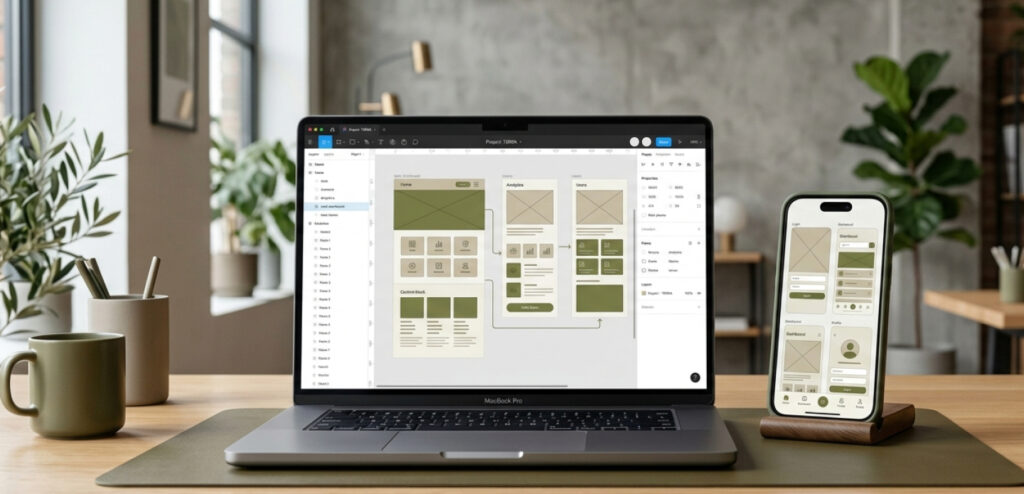
In modern digital product development, speed and user experience are directly connected to business success. Companies are under constant pressure to launch products faster while still maintaining quality, usability, and consistency. This is where figma prototypes have become an essential part of the product development process.
Figma has transformed how designers, developers, and stakeholders collaborate by making prototyping more interactive, accessible, and efficient. Instead of relying on static mockups or lengthy revisions during development, teams can now visualize and test product experiences before writing production code.
This shift has significantly improved communication between design and development teams, helping businesses reduce delays, validate ideas earlier, and optimize product launches more effectively.
For a broader understanding of interface design principles, insights from Wikipedia provide helpful background on how interface systems influence user interaction and usability.
What Are Figma Prototypes?
Figma prototypes are interactive visual representations of a digital product that simulate how users will navigate and interact with an interface. Unlike static wireframes, prototypes allow teams to test user flows, interactions, transitions, and functionality before development begins.
These prototypes help stakeholders experience a product as if it were already functional, making it easier to identify usability issues, design inconsistencies, and workflow problems early in the process.
Modern figma prototyping enables teams to create clickable experiences that mimic real applications, websites, and software interfaces. This improves collaboration because everyone involved can clearly understand how the final product is intended to function.
Prototyping has become an essential stage in modern design systems because it bridges the gap between concept and production. Research from Interaction Design Foundation highlights how prototypes support iterative testing, design refinement, and improved product outcomes.
Why Prototyping Accelerates Development Speed
One of the biggest challenges in software and digital product development is misalignment between design and engineering teams. Without clear interaction models, developers often have to make assumptions during implementation, which leads to revisions, delays, and inconsistent user experiences.
Figma prototypes solve this problem by providing developers with a clear visual and functional reference point before coding begins. Instead of interpreting static layouts, developers can interact with the prototype and fully understand navigation patterns, animations, and user flows.
This creates several advantages during development:
- Reduced back-and-forth communication between teams
- Faster implementation of UI components
- Fewer revisions during development cycles
By resolving usability and interaction issues earlier, businesses avoid costly changes later in production. This directly improves efficiency and shortens project timelines.
For businesses building scalable digital experiences, services like graphic design help align visual systems, user experience, and product consistency from the beginning of the development process.
The Role of UI UX Prototyping in Product Success
Strong ui ux prototyping goes beyond visual presentation. It focuses on validating how users interact with a product before development resources are heavily invested.
A prototype allows businesses to test navigation, user flows, and interface clarity in real-world scenarios. This process helps identify friction points that could negatively impact engagement or conversions after launch.
Instead of discovering usability issues after deployment, teams can address them during the prototyping stage. This leads to a more polished and user-friendly final product.
Effective prototyping also improves stakeholder confidence. Decision-makers can visualize how the product will function, making approvals faster and reducing uncertainty during development.
How Figma Improves Collaboration Across Teams
One of the reasons Figma has become widely adopted is its collaborative workflow. Unlike traditional design tools that rely on isolated files and version sharing, Figma enables real-time collaboration between designers, developers, marketers, and product managers.
This collaborative environment improves productivity because everyone works from a shared source of truth. Feedback can be added directly within the design system, reducing communication gaps and minimizing delays.
This level of collaboration becomes especially important during fast-moving product cycles where multiple teams need to stay aligned simultaneously.
Modern product development depends heavily on communication efficiency, and collaborative prototyping tools help streamline that process significantly.
Design Validation Before Production
One of the most valuable aspects of design validation is the ability to test concepts before committing development resources.
Launching a product without validation increases the risk of poor user adoption, usability issues, and unnecessary redevelopment costs. Prototypes reduce this risk by allowing teams to gather feedback early in the process.
Validation through prototyping helps businesses:
- Test user experiences before development begins
- Identify usability problems earlier
- Improve confidence in design decisions
This iterative process creates a stronger final product because design improvements happen before engineering investment increases.
The ability to validate concepts quickly is especially valuable for startups and businesses launching new digital products where speed and efficiency are critical.
How to Go From Prototype to Production Efficiently
Understanding how to go from prototype to production is one of the most important aspects of modern product development. A successful transition requires alignment between design systems, engineering workflows, and business goals.
Figma simplifies this transition by creating standardized design systems that developers can reference throughout implementation. Components, spacing systems, typography rules, and interactions remain consistent, which reduces confusion during production.
This consistency improves:
- Development accuracy
- UI consistency across devices
- Faster deployment timelines
For businesses building scalable platforms, website development supports the transition from design concepts into production-ready digital experiences optimized for usability and performance.
Figma Prototypes and Product Launch Optimization
Successful product launches depend on preparation, usability, and execution. Poor user experience at launch can negatively impact engagement, conversions, and customer trust.
This is why product launch optimization increasingly depends on prototyping and testing before release. Figma prototypes allow businesses to simulate real interactions and identify issues that could disrupt user experience after deployment.
Testing prototypes before launch helps businesses refine workflows, improve onboarding experiences, and optimize user journeys. This creates a smoother experience for customers and reduces the likelihood of launch-related issues.
Insights from Forbes show how iterative prototyping and validation contribute to successful product development and smoother transitions from idea to live application.
Supporting the Digital Product Lifecycle
The modern digital product lifecycle extends far beyond the initial launch. Products evolve continuously based on user feedback, analytics, and business goals.
Figma prototypes support this lifecycle by making iteration faster and more efficient. Teams can quickly test updates, refine workflows, and improve interfaces without disrupting the entire development process.
This adaptability allows businesses to remain competitive while continuously improving user experience over time.
Additionally, integrating prototyping with broader digital strategies, such as digital marketing, helps ensure that user experience aligns with customer acquisition and engagement efforts across channels.
Conclusion
Figma prototypes have become a critical part of modern product development because they improve collaboration, accelerate development speed, and reduce production risks. By allowing teams to validate ideas earlier and align workflows more effectively, prototyping creates a smoother path from concept to launch.
From ui ux prototyping and design validation to product launch optimization, the impact of prototyping extends across the entire digital product lifecycle. Businesses that invest in strong prototyping processes are better positioned to launch products faster, improve user experience, and adapt more efficiently to changing market demands.
As digital products continue to evolve, the ability to prototype, test, and refine experiences quickly will remain a key competitive advantage for businesses focused on long-term growth and innovation.