
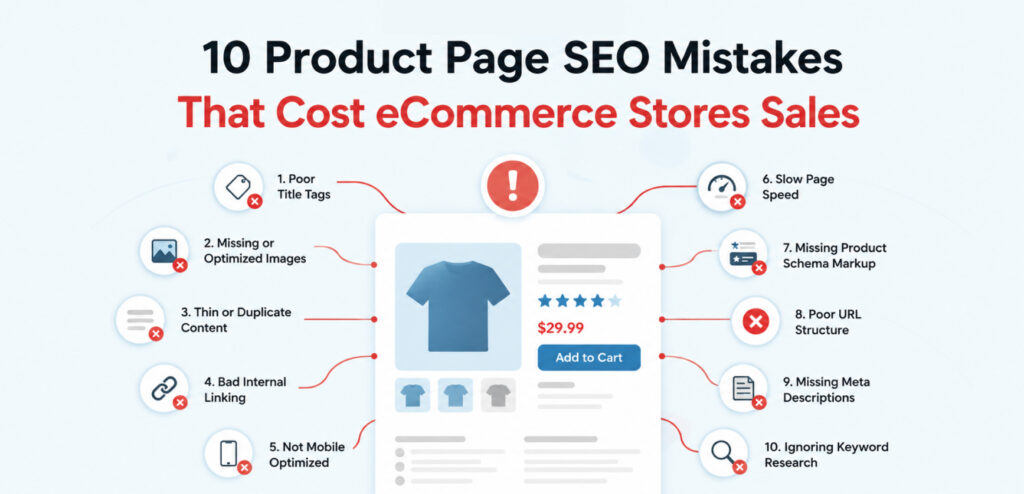
A product page is more than a digital catalog entry. It’s where search visibility, user trust, and purchase decisions come together. Even if your store attracts qualified traffic, poorly optimized product pages can reduce click-through rates, increase bounce rates, and discourage conversions.
According to IBM’s overview of eCommerce, modern online retail depends on creating seamless shopping experiences that help customers confidently complete purchases. Product page optimization plays a major role in that experience.
Whether you manage a small online store or a large product catalog, avoiding the following SEO mistakes can improve discoverability, strengthen customer confidence, and increase sales.
Why Product Page SEO Matters
Product page SEO is the process of optimizing individual product pages so they can rank for relevant searches while helping visitors make informed buying decisions. Unlike category pages that target broader keywords, product pages answer specific purchase intent.
Strong product pages influence:
- Organic rankings
- Click-through rate (CTR)
- User trust
- Product discoverability
- Add-to-cart rate
- Conversion rate
- Overall revenue
When these elements work together, every visitor has a better chance of becoming a customer.
1. Targeting the Wrong Search Intent
One of the most common mistakes is optimizing product pages around informational keywords instead of purchase-focused queries.
Someone searching “how to clean a wristband” expects educational content, while someone searching “bamboo sports wristband” is much closer to making a purchase.
Matching content with search intent helps search engines understand when your page deserves to appear for commercial searches while giving shoppers exactly what they expect.
2. Writing Thin Product Descriptions
Many stores rely on manufacturer descriptions or publish only a few generic sentences.
Thin content provides little value to search engines and even less to potential customers.
Instead, explain:
- product benefits
- practical use cases
- important specifications
- care instructions
- ideal users
- common buying questions
For example, if selling bamboo sports accessories, naturally explaining benefits like non toxic materials, plastic free construction, Organic with certification, or no microplastics can answer customer concerns without sounding promotional.
3. Ignoring Unique Product Value
Many competing stores sell similar products.
What separates one listing from another is clearly communicating why a shopper should choose it.
Instead of repeating specifications, explain how features solve real problems.
For instance, customers shopping for arm sweatbands often care more about grip, moisture absorption, durability, and comfort than fabric composition alone.
If those sweatbands happen to be made from bamboo or use 100% bamboo fibers, mention those attributes naturally where they genuinely influence buying decisions.
4. Weak or Missing Product Titles
Product titles should clearly communicate what the product is while naturally including important search terms.
Titles overloaded with keywords often reduce readability, while vague titles fail to communicate relevance.
A balanced product title helps both search engines and shoppers understand the page instantly.
Understanding the fundamentals of search engine optimization makes it easier to create descriptive titles that prioritize clarity over keyword stuffing.
5. Forgetting About User Experience
SEO doesn’t stop after someone clicks your listing.
If visitors struggle to browse product images, understand sizing, or complete checkout, rankings alone won’t generate sales.
An effective product page should provide:
- fast loading speed
- mobile-friendly layout
- readable formatting
- accessible navigation
- clear purchasing options
A strong user experience reduces friction and encourages visitors to continue through the buying journey.
6. Using Poor Product Images
Images influence both SEO and conversions.
Low-quality visuals reduce trust, while properly optimized images improve engagement and accessibility.
Best practices include:
- multiple viewing angles
- descriptive alt text
- optimized file sizes
- lifestyle photography
- zoom functionality
For products like sports accessories, showing real usage often answers questions faster than lengthy descriptions.
7. Neglecting Internal Linking Opportunities
Internal links help search engines discover important pages while guiding users toward additional information.
Instead of isolating product pages, connect them with relevant educational resources.
For example, a product page selling workout towels could naturally reference an in-depth comparison of bamboo and cotton sports towels to help shoppers understand material differences before purchasing.
Educational content often supports buying decisions more effectively than promotional copy alone.
8. Ignoring Product-Specific Questions
Every product category generates recurring customer questions.
Answering them directly improves user trust while increasing the likelihood of appearing in featured snippets and AI-generated search results.
Questions might include:
- Is this suitable for sensitive skin?
- How should it be washed?
- Is it reusable?
- What materials are used?
- Who benefits most?
If applicable, explaining why a product is considered the Best towel for acne prone and sensitive skin should come from its material properties rather than unsupported marketing claims.
9. Failing to Build Product Trust
Trust signals influence purchasing decisions as much as rankings.
Customers often hesitate when essential information is missing.
Helpful trust elements include:
- detailed specifications
- return policies
- shipping information
- customer reviews
- authentic product photography
A retailer selling products such as the best tennis wristband should explain practical benefits instead of relying on exaggerated claims.
Clear information consistently outperforms vague marketing language.
10. Treating Product Pages as Static Assets
Many businesses publish product pages once and never revisit them.
However, SEO is an ongoing process.
Regular updates can include:
- refreshing descriptions
- improving FAQs
- updating images
- refining metadata
- expanding buying guidance
- improving internal links
Even small improvements accumulate over time and can significantly increase organic visibility.
Stores that continuously improve their product pages often outperform competitors relying on outdated content.
For example, adding context around products like sports headbands or expanding educational resources can improve both user engagement and search relevance.
Quick Product Page SEO Checklist
Before publishing or updating a product page, verify that you have:
- Matched commercial search intent
- Written original product descriptions
- Explained real customer benefits
- Used descriptive product titles
- Optimized images and alt text
- Improved page experience
- Added helpful internal links
- Answered common customer questions
- Included trust-building information
- Reviewed the page regularly for improvements
Final Thoughts
High-performing product pages don’t succeed because they contain more keywords. They succeed because they answer buying questions better than competing pages while creating a smooth shopping experience.
The strongest eCommerce stores treat every product page as a valuable landing page rather than a simple inventory listing. They continuously refine content, improve usability, strengthen internal linking, and provide meaningful information that supports confident purchasing decisions.
Brands such as Sweat Heaven demonstrate how combining informative content with well-structured product pages can help customers better understand products before making a purchase. Regardless of your industry, investing in product page SEO is ultimately an investment in long-term organic growth, stronger customer trust, and higher revenue.