Every business that wants to grow online faces a common question: should you invest in content marketing or paid advertising?
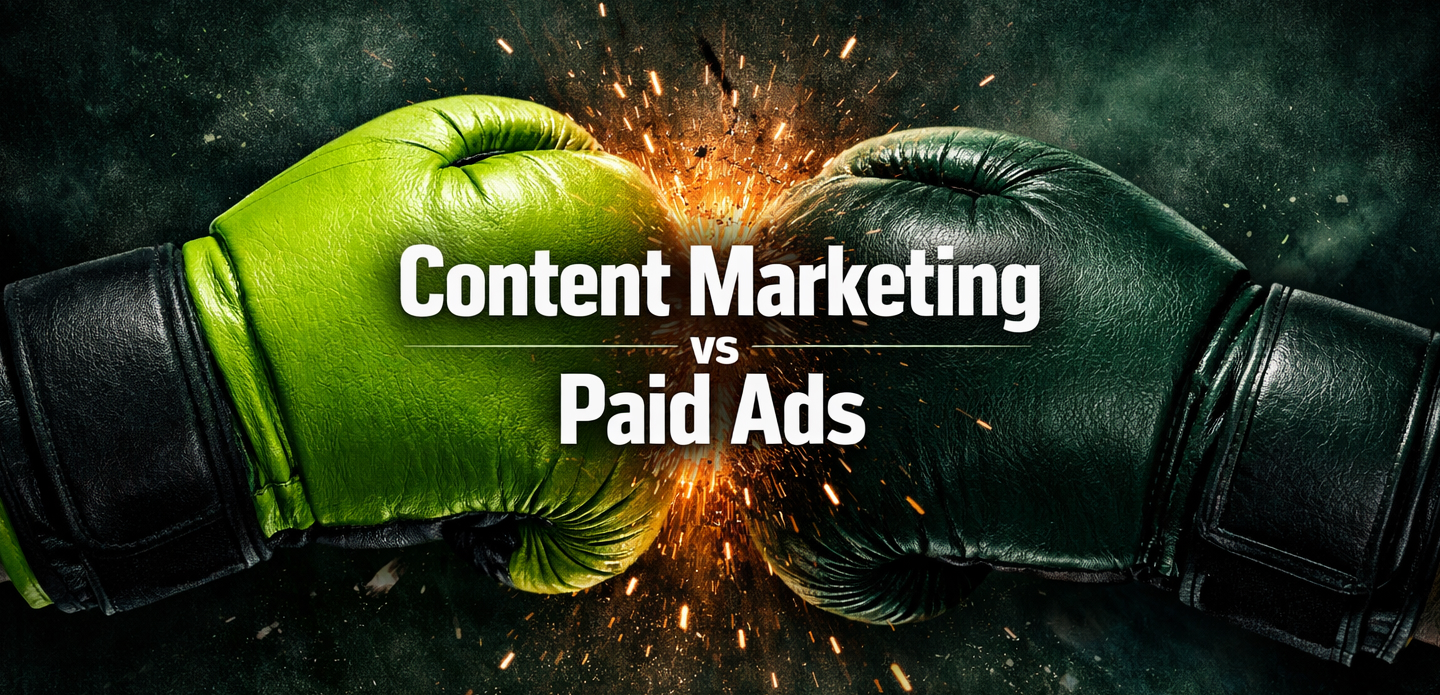
Both strategies can deliver powerful results, but they work in completely different ways. Content marketing builds long-term trust and organic visibility, while paid ads deliver fast, measurable results that depend on your budget.
In this guide, we’ll explore the key differences between content marketing and paid ads, how each impacts your ROI, and how to decide which strategy best fits your goals and budget.
What Is Content Marketing?
Content marketing focuses on creating and distributing valuable, relevant content to attract and retain a target audience. It educates and engages people instead of directly selling to them.
Examples include:
- Blog posts and articles
- Videos and podcasts
- Case studies and eBooks
- Infographics and social media posts
The main goal of content marketing is to drive organic growth through helpful content that ranks on search engines and builds brand authority.
Content marketing works best when combined with strong SEO practices, including keyword optimization, internal linking, and understanding user intent.
Our Content Marketing Services help brands produce high-quality blogs, videos, and guides that engage audiences and build long-term trust.
What Are Paid Ads?
Paid advertising, or PPC (Pay-Per-Click), involves paying platforms like Google Ads, Facebook Ads, or LinkedIn Ads to display your message to a specific audience.
With paid ads, you can target people based on search intent, demographics, location, or behavior. You pay each time someone clicks your ad or engages with it.
Paid advertising is an effective way to get instant visibility, especially for new products, seasonal promotions, or time-sensitive offers. You can learn more about how pay-per-click (PPC) advertising works on Wikipedia.
Paid ads are great for immediate results, but once you stop funding campaigns, your traffic and leads stop too.
The Key Difference Between Content Marketing and Paid Ads
The biggest difference between content marketing and paid ads lies in their timeframes and sustainability.
Content marketing is designed for long-term growth. It takes time to build momentum, but once your content ranks, it can generate leads and sales for months or even years without continuous spending.
Paid ads, on the other hand, deliver instant results. You can drive traffic and conversions within hours of launching a campaign, but this visibility only lasts as long as you keep paying.
Content marketing builds trust, while paid ads buy attention. Both are valuable, but they serve different business goals.
ROI Comparison: Content Marketing vs Paid Ads
When evaluating marketing strategies, ROI (Return on Investment) plays a major role. Let’s see how each performs in terms of value and longevity.
ROI of Content Marketing
- Generates sustainable, compounding traffic from search engines.
- Builds authority and brand awareness over time.
- Offers lower long-term costs once initial content is created.
- Continues to bring in leads even without ongoing ad spend.
A report by Demand Metric found that content marketing costs 62 percent less than traditional marketing and generates about three times as many leads.
ROI of Paid Ads
- Provides instant, measurable results through clicks and conversions.
- Ideal for time-sensitive campaigns or product launches.
- Allows for detailed targeting and performance tracking.
- Can become expensive if not optimized properly.
According to WordStream, the average ROI for Google Ads is around 200 percent, meaning businesses earn about $2 for every $1 spent.
In short, paid ads provide immediate visibility, while content marketing delivers steady growth that compounds over time.
How to Build a Balanced Marketing Strategy
Instead of choosing one over the other, the best approach is to balance both strategies. Paid ads give you short-term wins, while content marketing ensures long-term success.
Schedule a Marketing Strategy Consultation with us to identify the right mix of content marketing and paid ads tailored to your business goals.
So here’s how to create a balanced plan:
Step 1: Define Your Goals
Start by clarifying what you want to achieve.
- If your goal is quick sales or event promotion, prioritize paid ads.
- If you want consistent organic growth, focus on content marketing.
Your objectives determine how much time and budget to allocate to each.
Step 2: Understand Your Audience
Research who your customers are and where they spend their time online. Use analytics tools and keyword research platforms like Ahrefs Keyword Generator to learn what they’re searching for and what content resonates most.
Step 3: Create SEO-Optimized Content
Develop content that educates your audience and solves their problems.
Examples:
- Blog posts explaining how your product works
- Case studies that build trust
- Tutorials or guides targeting your focus keyword “content marketing vs paid ads”
Make sure your content is well-structured with headings, meta tags, and internal links to related pages.
Step 4: Launch Targeted Paid Campaigns
While your content is gaining organic traction, run PPC ads to generate fast results.
Try:
- Google Search Ads for intent-based targeting
- Facebook or Instagram Ads for brand awareness
- Retargeting ads for visitors who didn’t convert
Monitor key performance indicators such as click-through rate (CTR), cost per acquisition (CPA), and return on ad spend (ROAS).
Step 5: Measure, Optimize, and Reinvest
Regularly track which marketing efforts deliver the best results. Use Google Analytics to monitor traffic, conversions, and ROI for both channels.
Over time, you can shift your budget toward the strategy that produces the highest long-term return.
When to Choose Content Marketing
Choose content marketing if:
- You want sustainable organic traffic.
- You aim to build trust and brand authority.
- You have a smaller, consistent budget.
- You want results that compound over time.
Once your content ranks, it can continue driving leads for years with minimal maintenance.
When to Choose Paid Ads
Choose paid ads if:
- You need immediate visibility and traffic.
- You are launching a new product or campaign.
- You want precise control over targeting and budget.
- You have a flexible marketing budget.
Paid ads are perfect for quick testing, scaling, and gaining short-term traction, but they should not replace organic strategies completely.
Why Combining Both Delivers the Best Results
The most effective marketing strategies use both content marketing and paid ads together.
You can:
- Use paid ads to promote your new blog posts or videos.
- Run retargeting ads based on users who interacted with your content.
- Use high-performing content as ad creatives to boost engagement.
This hybrid model ensures your business benefits from both immediate conversions and long-term organic visibility.
Common Mistakes to Avoid
- Ignoring SEO when running paid campaigns.
- Relying only on ads and neglecting content creation.
- Expecting content to deliver instant results.
- Failing to measure ROI separately for both strategies.
- Using identical messaging across all platforms.
Avoiding these mistakes helps maintain a consistent, cost-effective marketing strategy that grows with your business.